
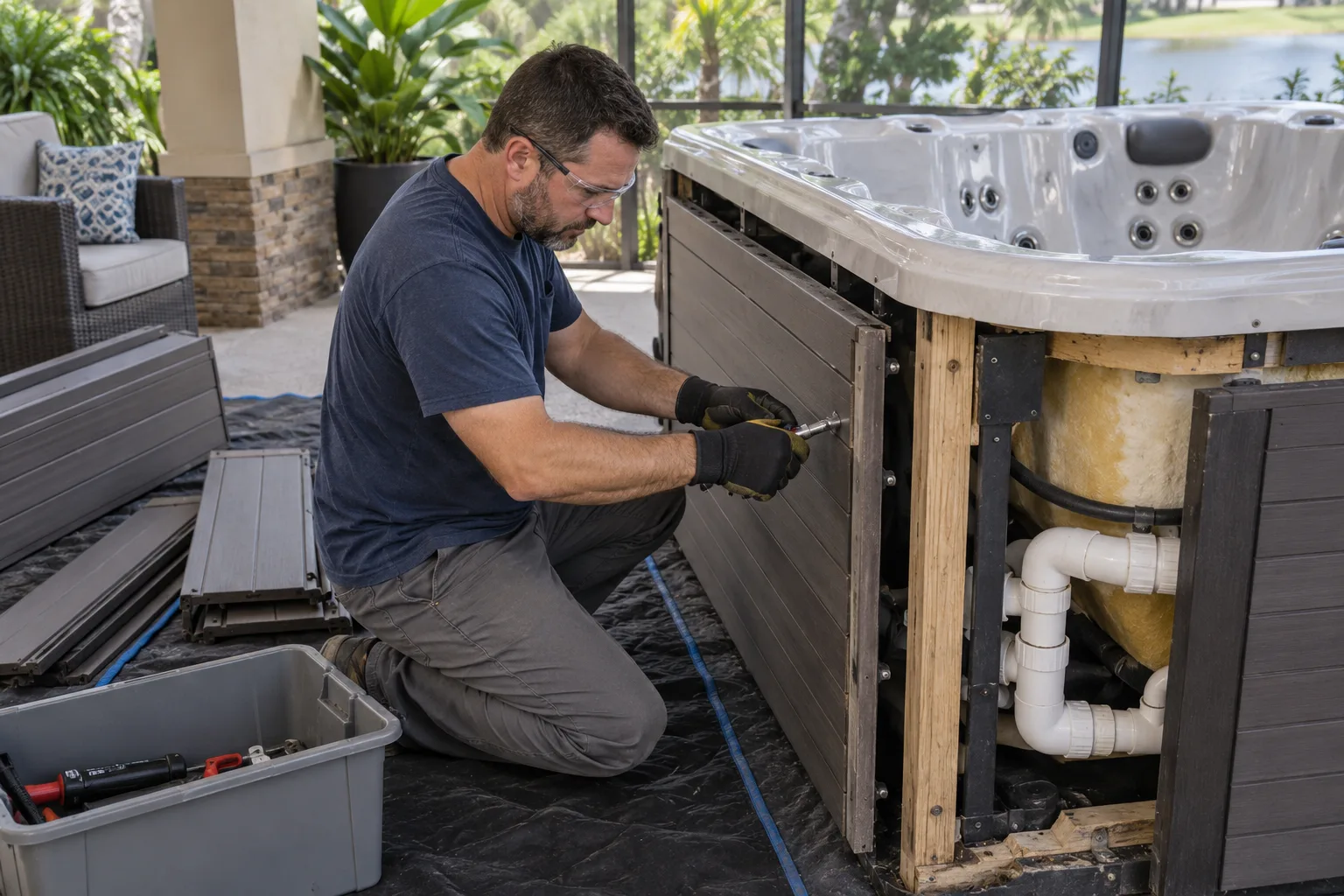
Prepare the site, not the demolition. A removal crew needs a drained tub, a confirmed utility status, and a clear view of the route. Electrical, gas, or plumbing disconnection should be handled by the appropriate qualified person before dismantling starts.
Start with power, water, and gas
Locate the disconnects and confirm who is responsible for making the system safe. The U.S. Consumer Product Safety Commission advises knowing where hot-tub electrical switches and breakers are located. Do not reach into water around powered equipment, and do not treat a switched-off control panel as proof that every conductor is safe.
Drain without creating a new problem
Follow the manufacturer and local rules for draining. Route water away from doors, foundations, neighboring lots, and storm-sensitive areas. Remove loose chemicals from the work zone and keep them in their labeled containers for an appropriate disposal path.
Photograph the whole route
Take one wide photo of the spa, one of the equipment side, and one at every narrow turn. Measure the tightest gate or screen door. Include stairs, retaining edges, delicate pavers, irrigation heads, and the distance to the likely loading point.
Leave the shell assembled until the plan is agreed
A partly cut shell can become harder to grip, sharper to carry, and more difficult to price from photos. Let the removal plan determine where and how dismantling happens.
Use this checklist
- Tub drained
- Utility status confirmed
- Chemicals removed from work area
- Gate and screen-door widths measured
- Stairs and tight turns photographed
- Parking and community access checked
Sources
Retrieved October 2, 2026. Confirm current local rules before acting.
Need help defining the actual job?
Plan an estimate